

How Many Registered Republicans Did Not Vote This Time
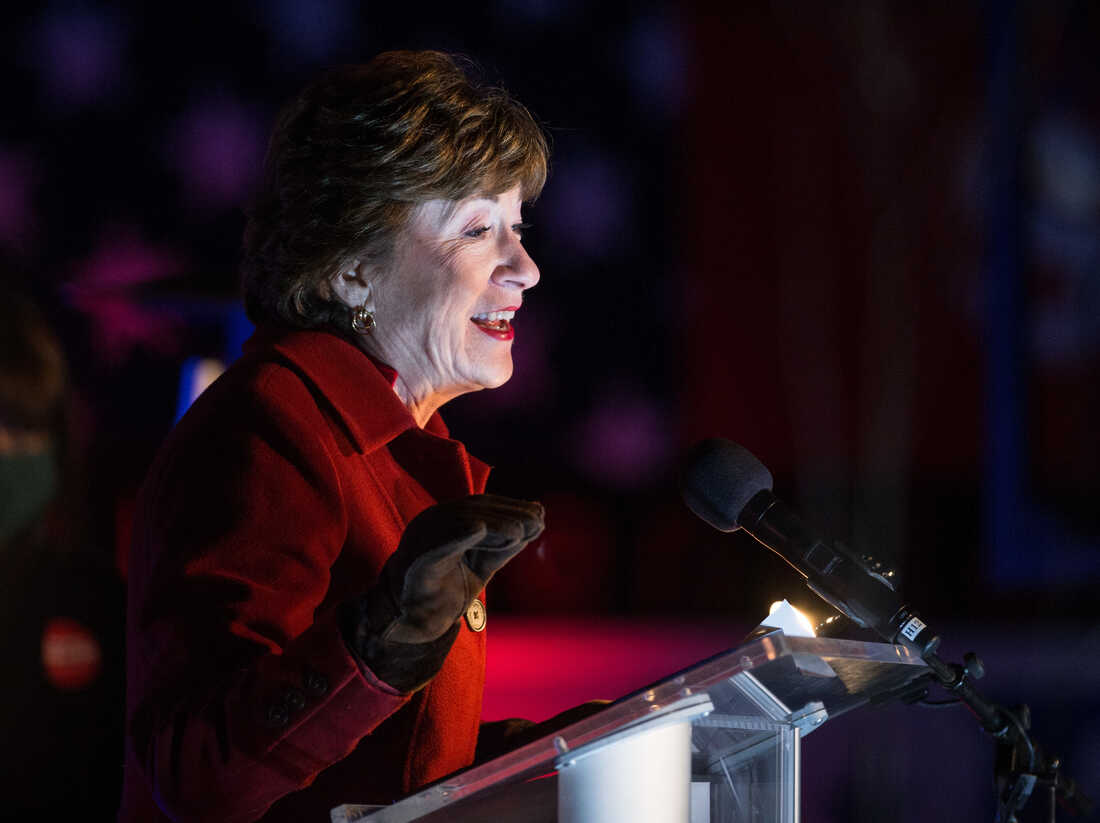
Republican Sen. Susan Collins delivers election night remarks to supporters and staff on Nov. three in Bangor, Maine. Collins was down by iv points in an average of polls before Election Day but won by ix percentage points. Scott Eisen/Getty Images hide explanation
toggle caption
Scott Eisen/Getty Images
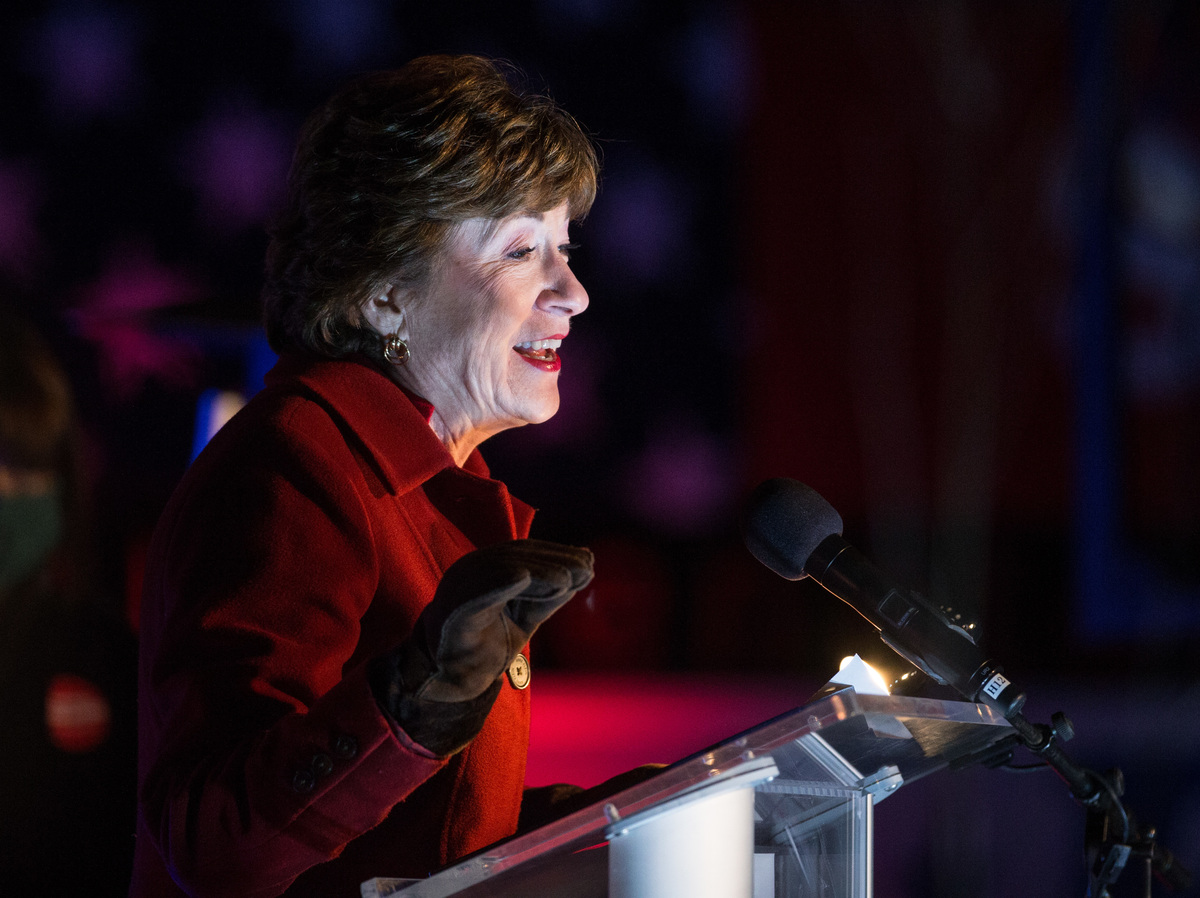
Republican Sen. Susan Collins delivers election dark remarks to supporters and staff on November. 3 in Bangor, Maine. Collins was down by 4 points in an average of polls earlier Election Day simply won by ix per centum points.
Scott Eisen/Getty Images
Republicans outperformed the polls up and down the ballot in the 2020 election, to the surprise fifty-fifty of many Republican political operatives and survey researchers.
To exist articulate, Democrat Joe Biden defeated President Trump; Democrats will still command the Business firm and still accept a hazard of picking up the Senate.
But Republicans made gains in the House — so far netting five seats (with 22 races non yet called). Given their presumed force in the suburbs, Democrats had been expected to expand their majority.
That became increasingly likely the closer the ballot got — and non just because of public polls. That was also the expectation of Republicans who carry their own individual polling and work on, run and propose campaigns.
In the Senate, Democrats have and then far gained one seat, simply they need iii with a Biden win to take over the chamber. Democrats yet have a adventure of doing that with two runoff elections in Georgia. That's seen as possible, simply not likely.
Information technology wasn't expected to be this way. Democrats had put lots of Senate races in play, ones not expected to go their manner at the first of the 2020 wheel, places similar Kansas and Montana.
To be sure, many of the Senate races were expected to be close, perhaps with razor-thin margins, and a Democrat-controlled Senate was never an assured outcome. Simply when you wait at the boilerplate of the polls in the terminal week of the election versus the ultimate result, it's clear that Republicans were underrepresented all across the country.
Loading...
All of these races, except Colorado and Alabama, were within unmarried digits in the polls. Colorado, a land Biden won handily, wound up pretty close to the average. Alabama, a state Trump won by a lot, was an even bigger blowout than expected.
Many of the supposedly tightest races didn't wind upwards tight at all. Maine is perhaps the almost stunning one. Biden won the state by nine per centum points, but Republican incumbent Susan Collins won reelection by 9 points.
Not only was Collins downwards by iv points heading into Election Day in an average of the polls in the week before the election, just she led in just ane poll in all of 2020. And that was back in July. That's one poll out of almost three dozen.
In Southward Carolina, money flowed to Democrat Jaime Harrison, who looked as if he actually had a shot of defeating incumbent Sen. Lindsey Graham. The Cook Political Report, which talks to the committees that assist elect the candidates in each part, and others rated the race equally a toss-up.
The polls seemed to bear that out, showing the race even. But in the terminate, it wasn't fifty-fifty close. Graham won by 10 percentage points. It was ever going to be tough for a Democrat to win statewide in S Carolina in a presidential year.
In Alaska, incumbent Republican Dan Sullivan'southward double-digit margin could tighten with mail-in votes still out and but 74% of the votes in as of Midweek, so put an asterisk next to that one, but that was supposed to exist a 3-point race.
There is going to be a reckoning — again — within the polling industry. Survey researchers are already combing their numbers for patterns of what went incorrect.
Some theories at this signal include:
Early voting: Surveys having too many people in their samples proverb they would vote early. The pollsters had a tough time adjusting for that, because there's no historical tendency to go by.
Democratic overresponse: Democrats and Autonomous-leaning independents seem to have been more than willing to talk to pollsters, and pro-Trump Republicans just didn't want to participate as much because of their deep distrust of and disdain for the polls and the media.
This is not the idea of a "shy" Trump voter. While survey researchers — Democratic, Republican and nonpartisan — all constitute people, particularly women, less willing to say they are Trump supporters to their friends and families, at that place is little evidence they aren't telling pollsters they support the president.
The bigger problem may be Trump supporters simply not wanting to participate at all. That would seem to make sense, because the consequent underestimation of Republican vote, especially in Republican-leaning states.
A Trump miracle: The other thing that is tough to quantify is whether this is something unique to when Trump is on the ballot. He has vilified polls and the media to a far greater extent than any other presidential candidate. Supporting the idea that this was simply a Trump phenomenon is that polls were right in the 2018 midterm elections and nearly every special election in the last iv years.
These are simply early theories, simply information technology's probably going to exist best practice to put even less stock in horse-race polling as an verbal science and to use crude, more artful measures, including demography, ad spending and private campaign poll reporting to find out where the campaigns think is of import and where a candidate may or may non have a shot.

How Many Registered Republicans Did Not Vote This Time,
Source: https://www.npr.org/2020/11/11/933435840/the-2020-election-was-a-good-one-for-republicans-not-named-trump
Posted by: engelwourroon1942.blogspot.com
0 Response to "How Many Registered Republicans Did Not Vote This Time"
Post a Comment